
In February 2026 I made a trip to Yekaterinburg — a city that looks especially graphic in winter. Snow softens the lines, the sky becomes dense and cold, and the light is diffused, almost studio-like. I took my Canon EOS R8 and the RF 28mm lens — an ideal combo for a city walk: wide angle without excessive distortion, and light enough to carry for hours.
Photo gallery
Below are all the shots from the walk in route order. File-to-place mapping: 00 — general view / start; 01 — Church on the Blood; 02 — Plotinka; 03 — street art (mural); 04 — Yeltsin Center; 05 — embankment; 06–19 — other frames from the route. If your file order is different, rename the photos in static/images/ekb-2026/ or adjust the captions below.




Church on the Blood
Address: 10 Tsarskaya Street
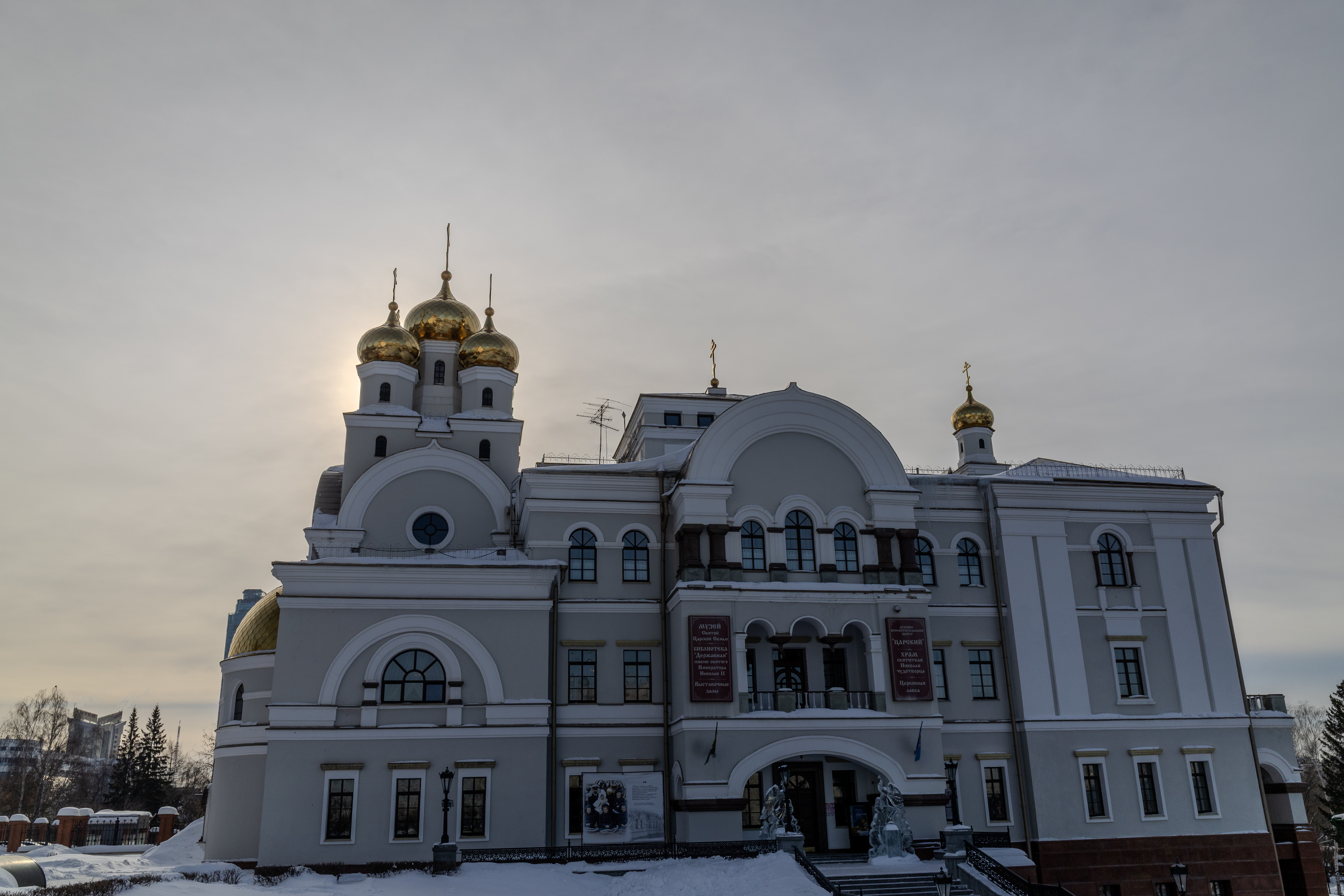
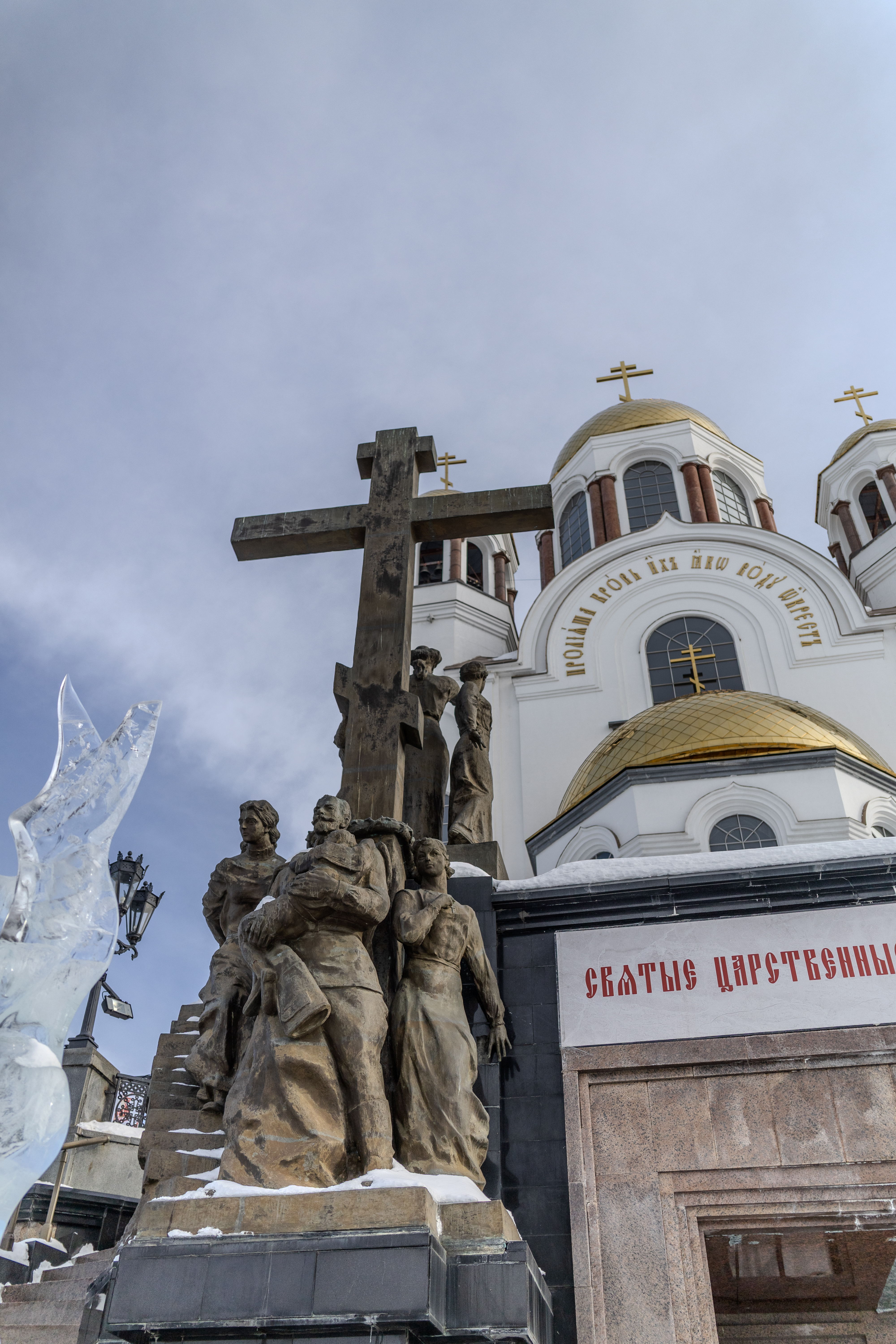
I started the route at one of the city’s most atmospheric spots — the Church on the Blood memorial. In winter the white walls and golden domes stand out sharply against the grey Urals sky.
At 28mm I could fit both the monument with the cross and the domes in one frame without feeling cramped. One detail I liked: if you move closer to the Romanov family monument and lower the camera slightly, the cross starts to “cut” the sky, creating an almost cinematic perspective.
What felt unusual here was the silence. Despite being in the city centre, the snow seems to muffle sound — only the crunch of footsteps remains.
Plotinka (City Pond Dam)
Address: Lenin Ave., Historic Square area
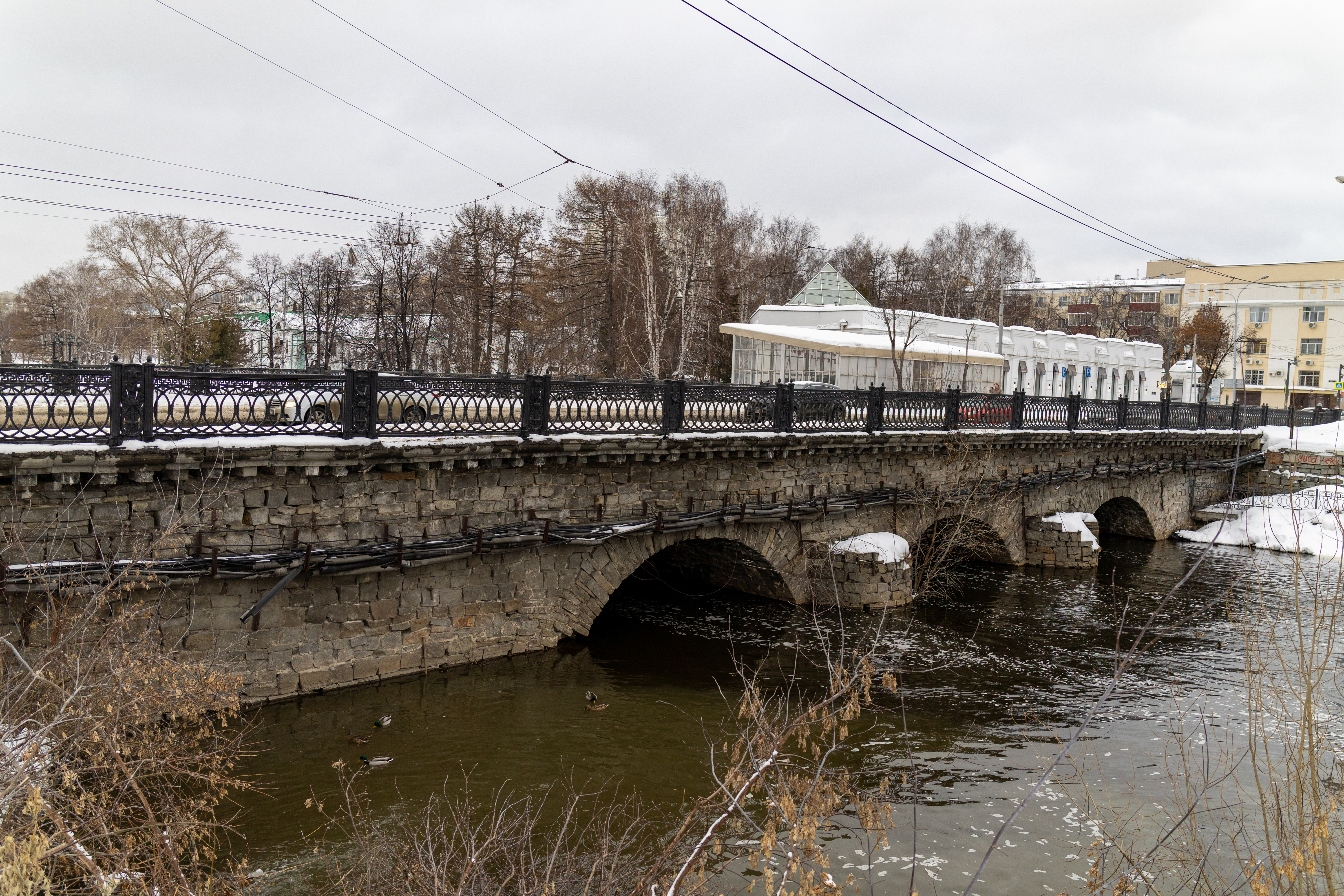
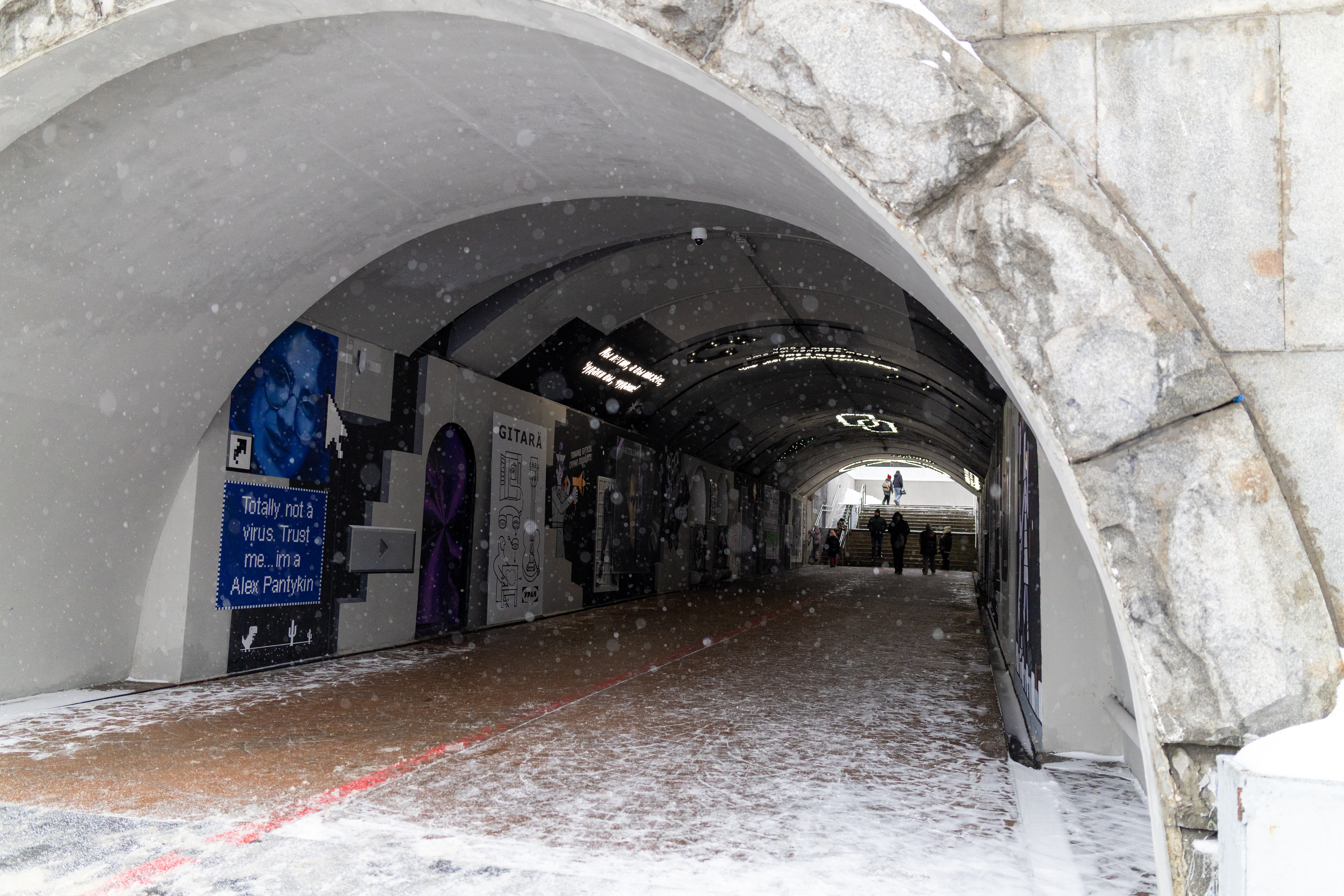
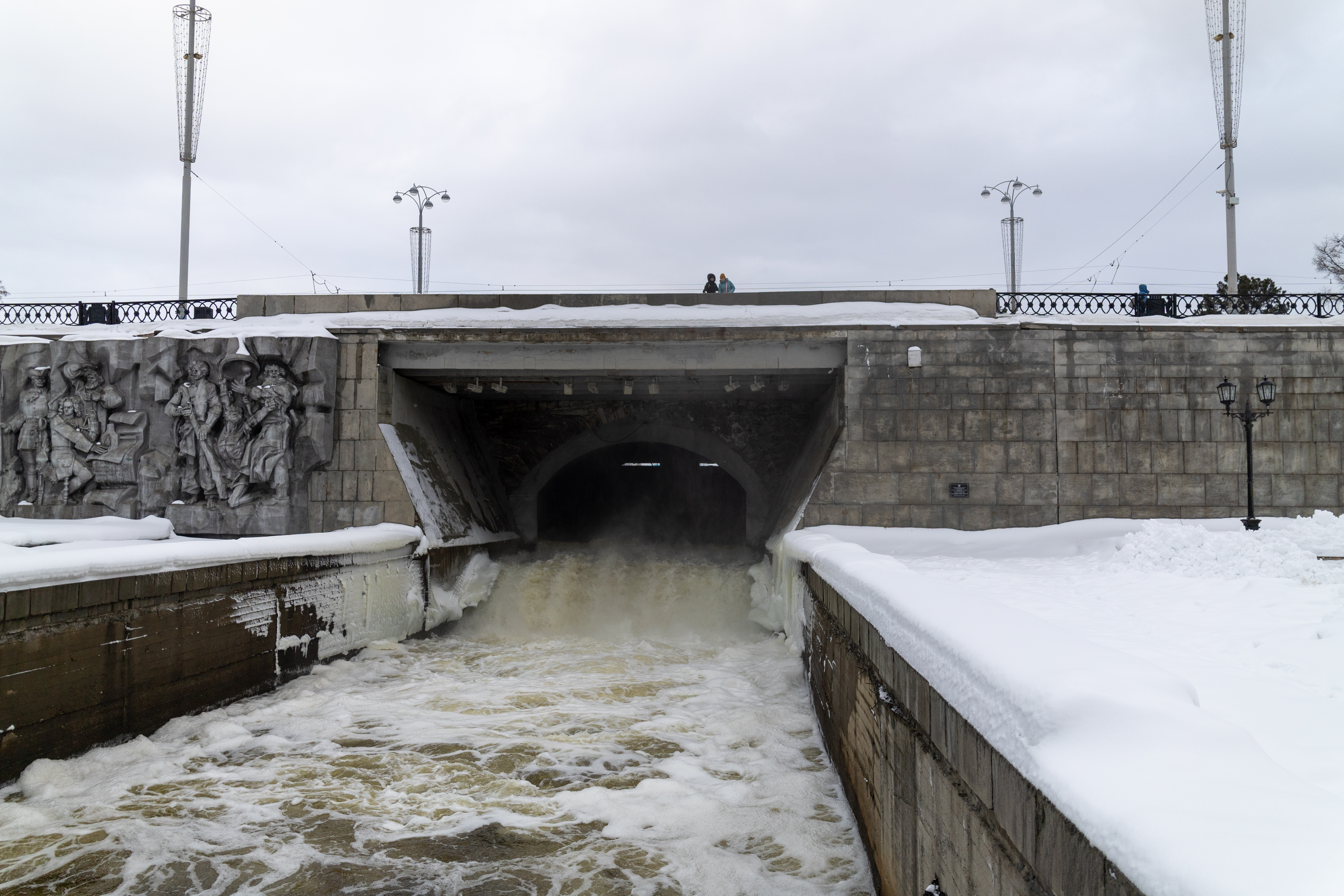
From the church I walked down to Plotinka — the place where Yekaterinburg began as an industrial town. In winter the water churns under the ice and steam rises from under the bridge.
The bas-reliefs on the dam walls are a story in themselves. Soviet industrial epic in stone: workers, metallurgists, builders. With a wide angle you can capture both the motion of the water and the monumental figures — the contrast of movement and stillness.
Not many people know that the first factory workshops stood here in the 18th century, and the whole city effectively grew from this spot.
Street Art in the Backyards
(8 Marta Street area and central neighbourhoods)
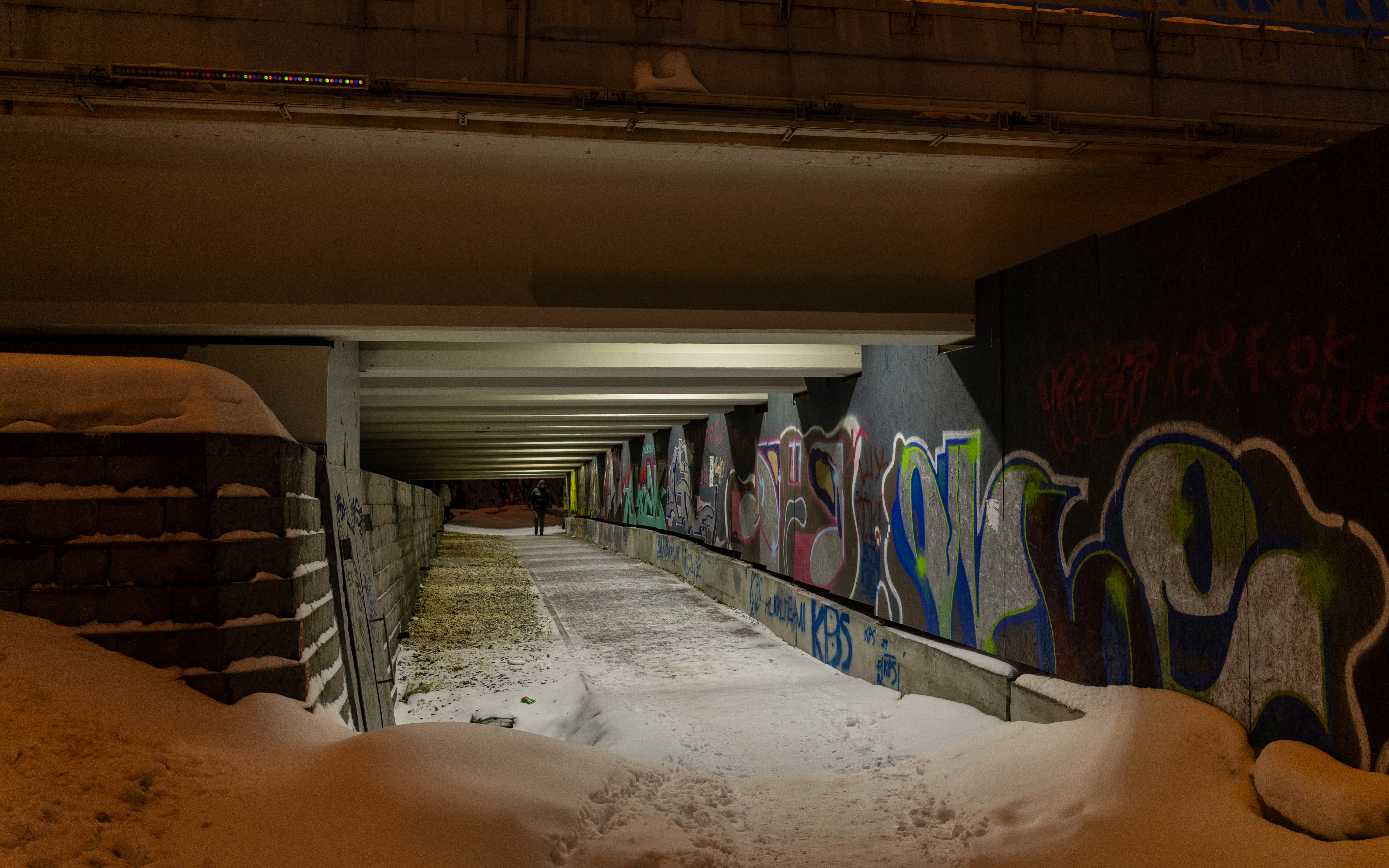
In the courtyard of an old brick building I came across a large mural of an old craftsman. In winter it stands out even more — bright colours against snow and red brick.
At 28mm I could frame the whole thing without stepping too far back — the yard is tight and cars are parked close. Places like this are the real Yekaterinburg: a mix of industrial past and contemporary street art.
Yeltsin Center
Address: 3 Boris Yeltsin Street
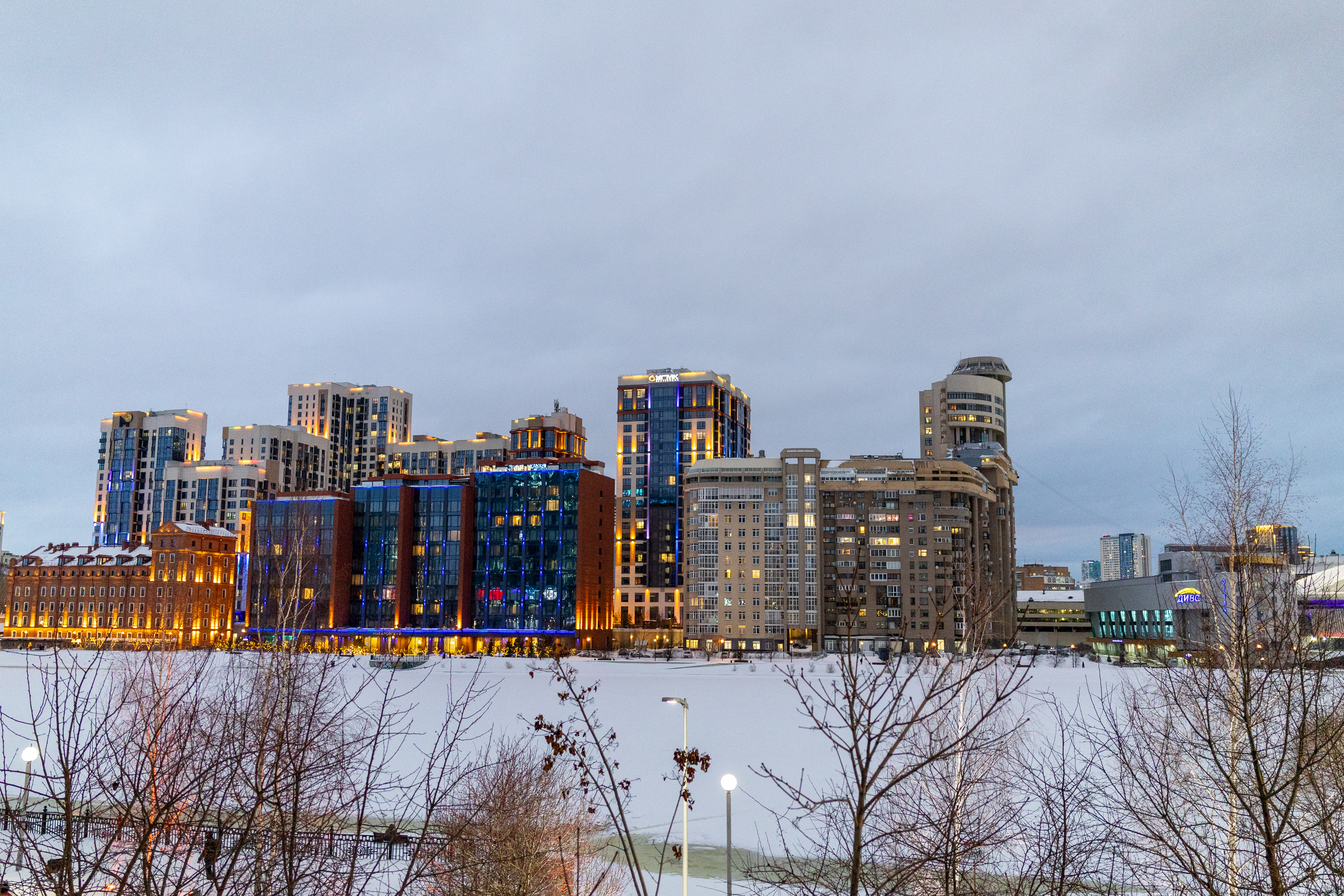
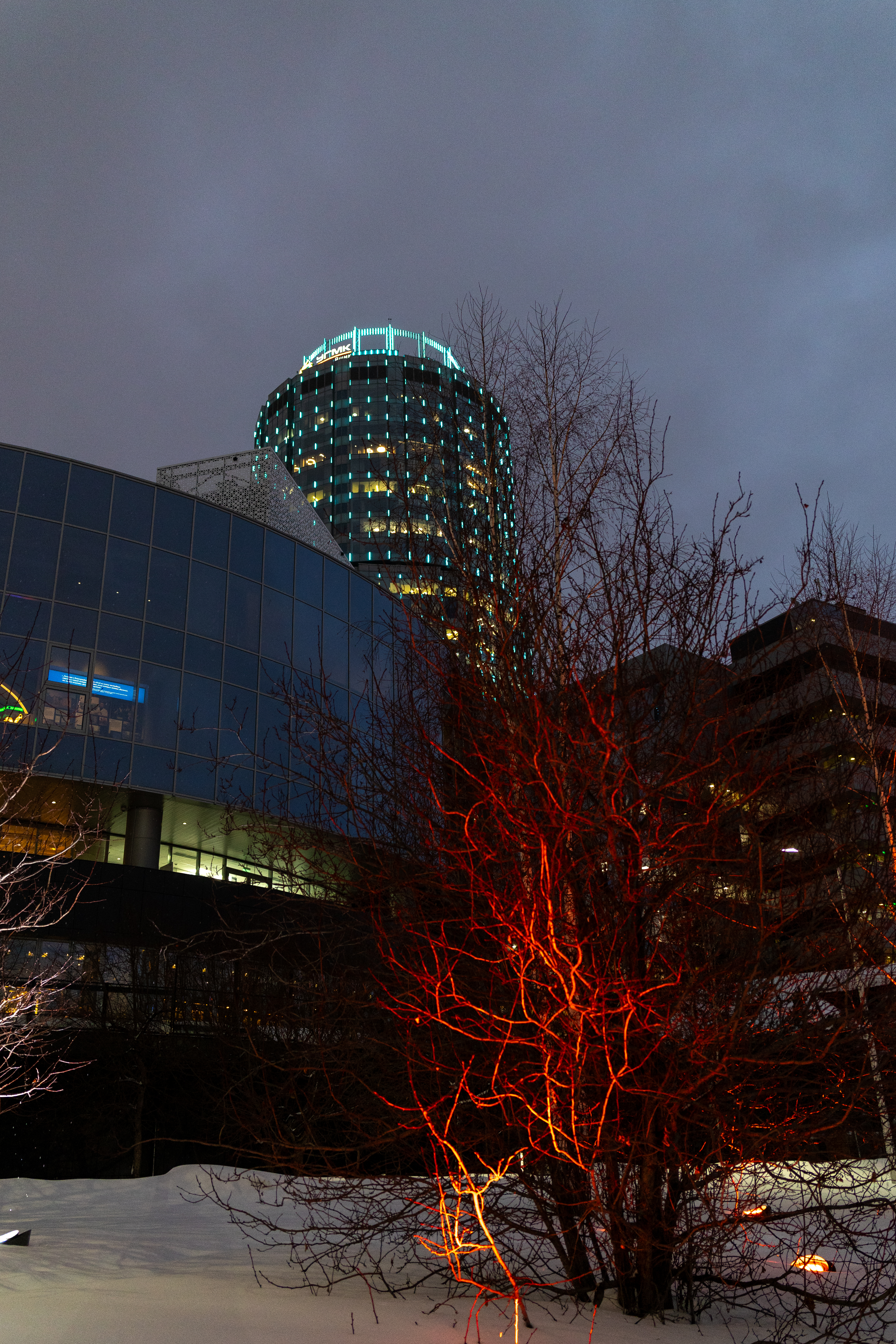
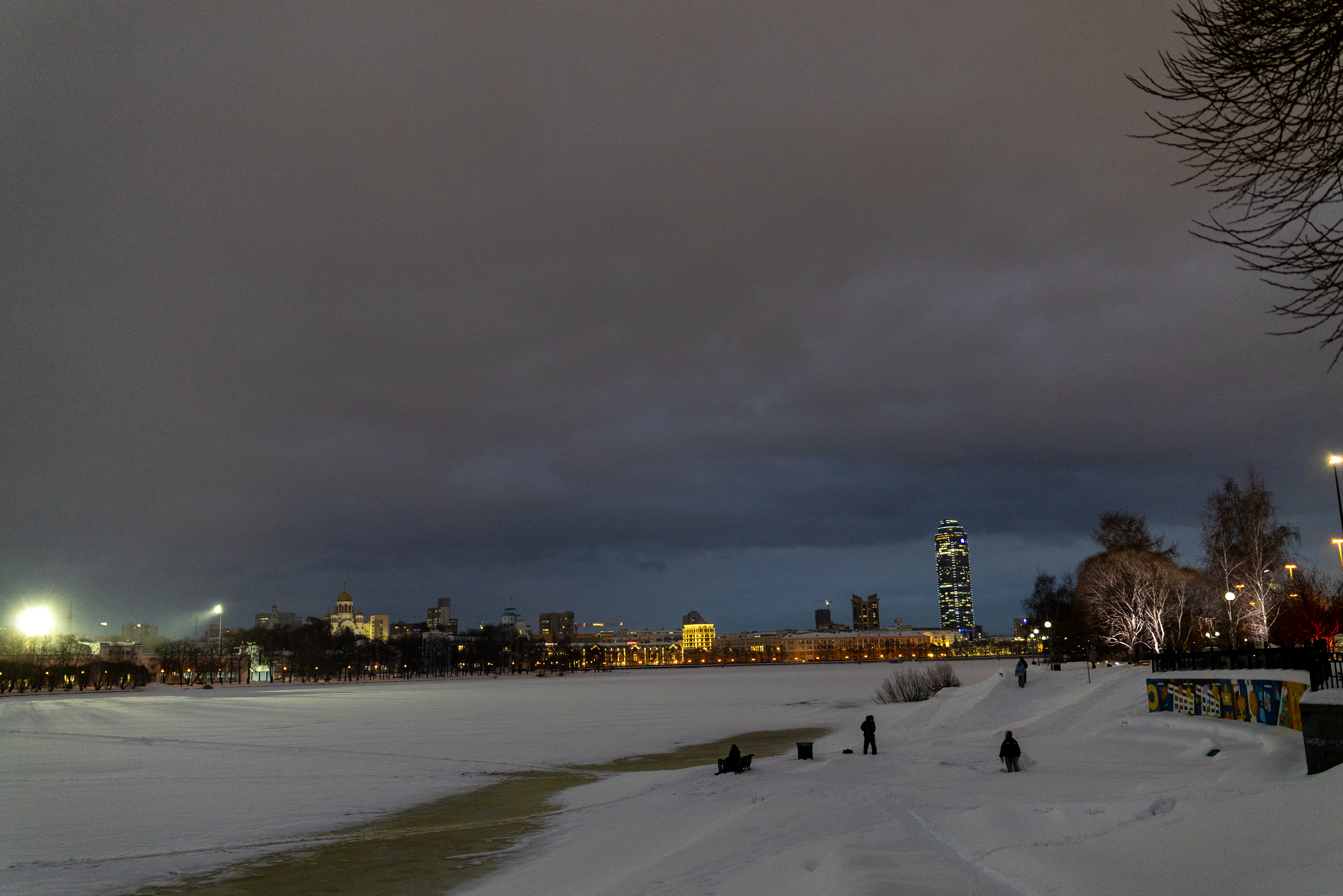
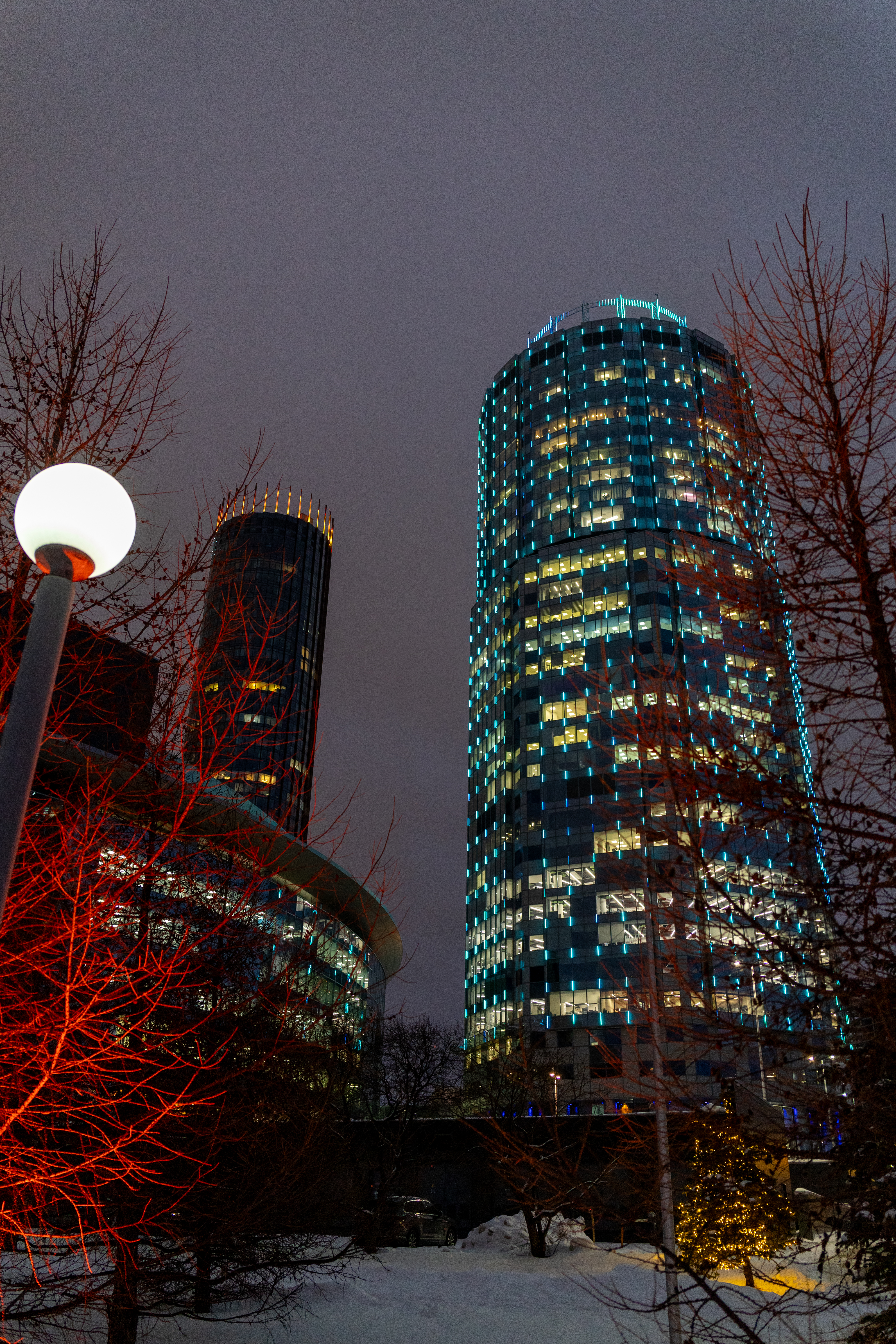
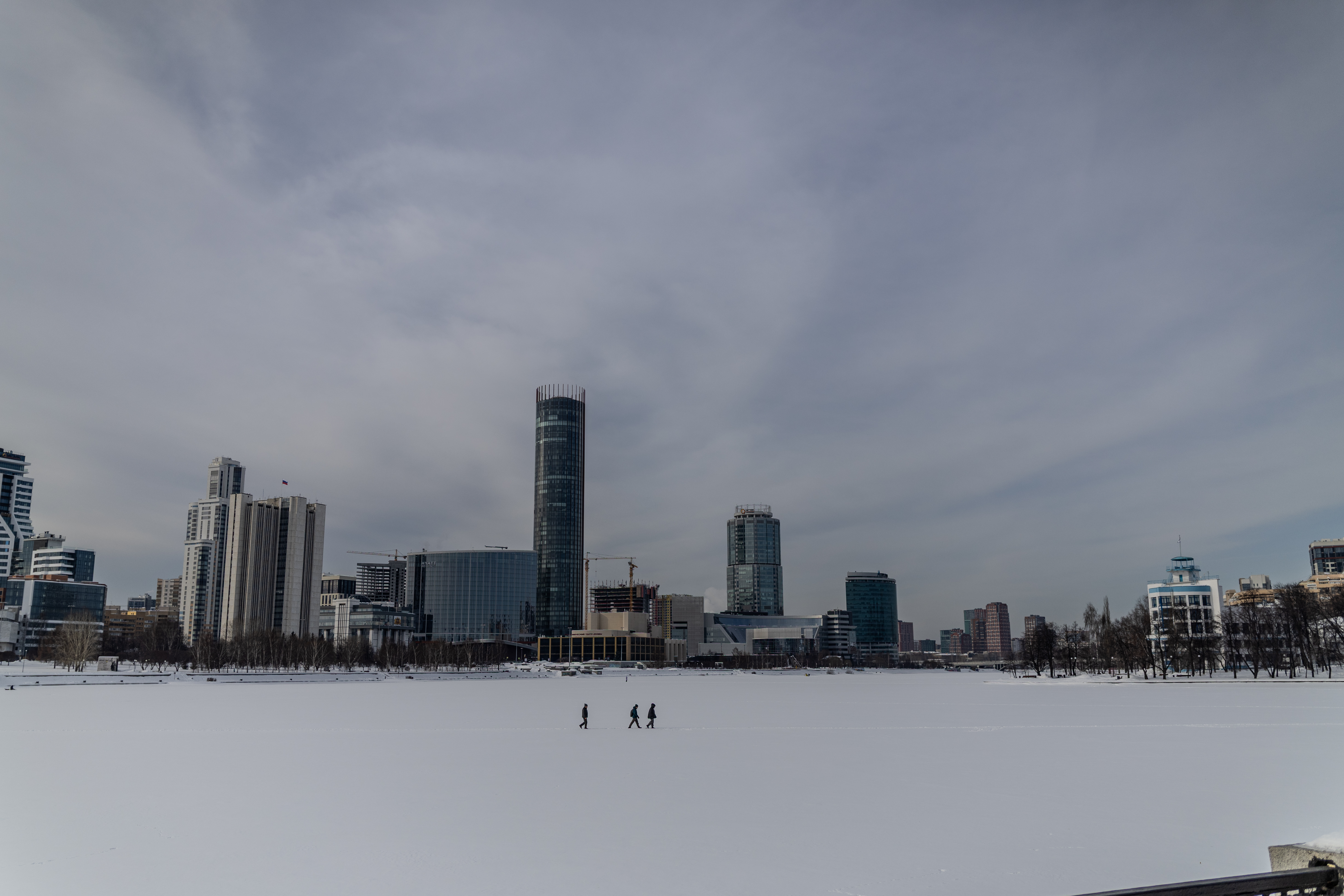
By evening I reached the embankment and the Yeltsin Center. In winter the city pond turns into a white field with people walking across it — small silhouettes against the glass towers.
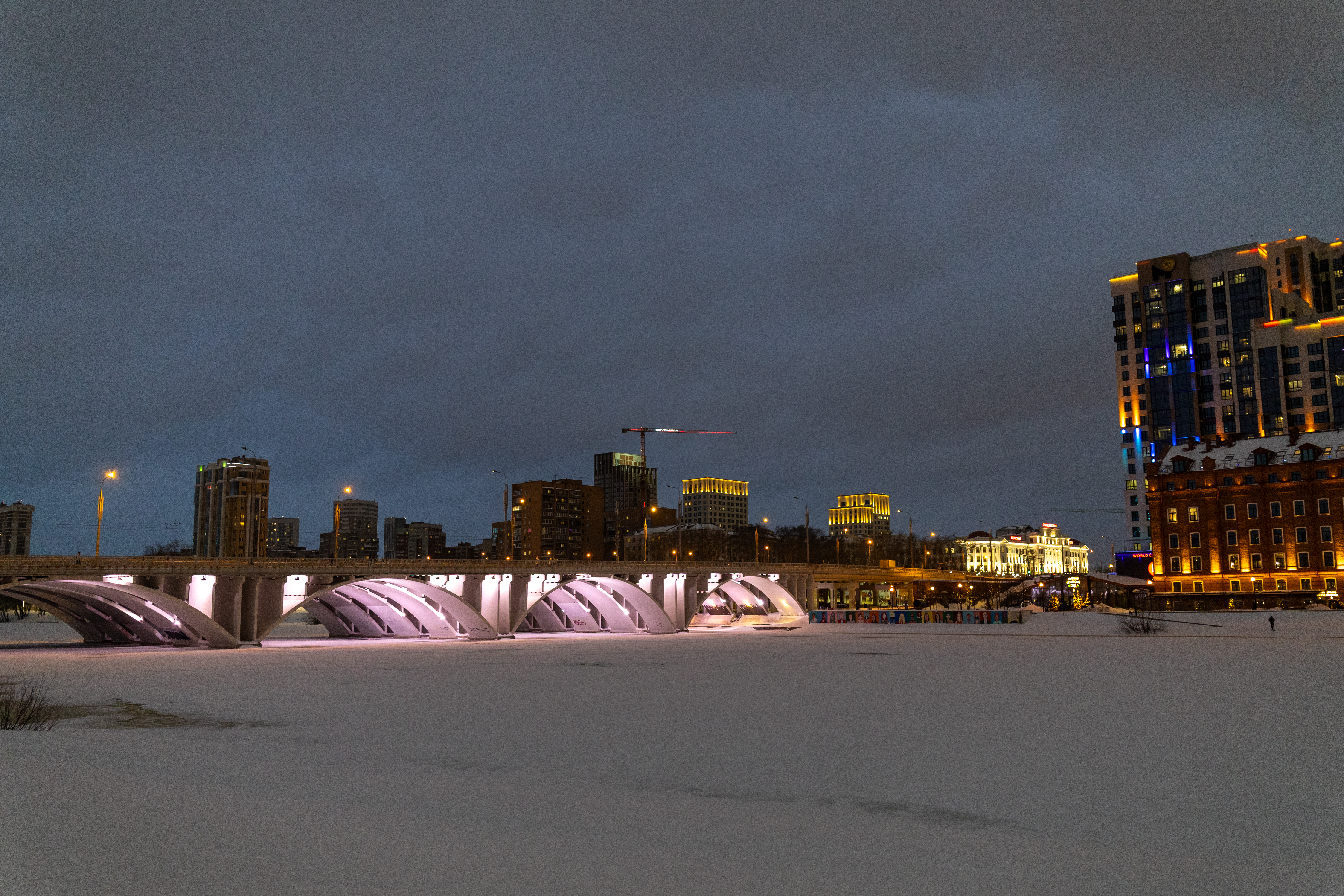
The wide angle works especially well here: you can take in the bridge, the lit arches and the lights of the business district. At dusk the center’s building glows with a soft warm light, and the bridge over the Iset is lit in a pinkish tone — very photogenic.
One detail: if you stand on the stairs at the entrance and tilt the camera up slightly, you get both the Christmas tree with lights and the city behind — it feels like a European winter evening.
City Pond Embankment
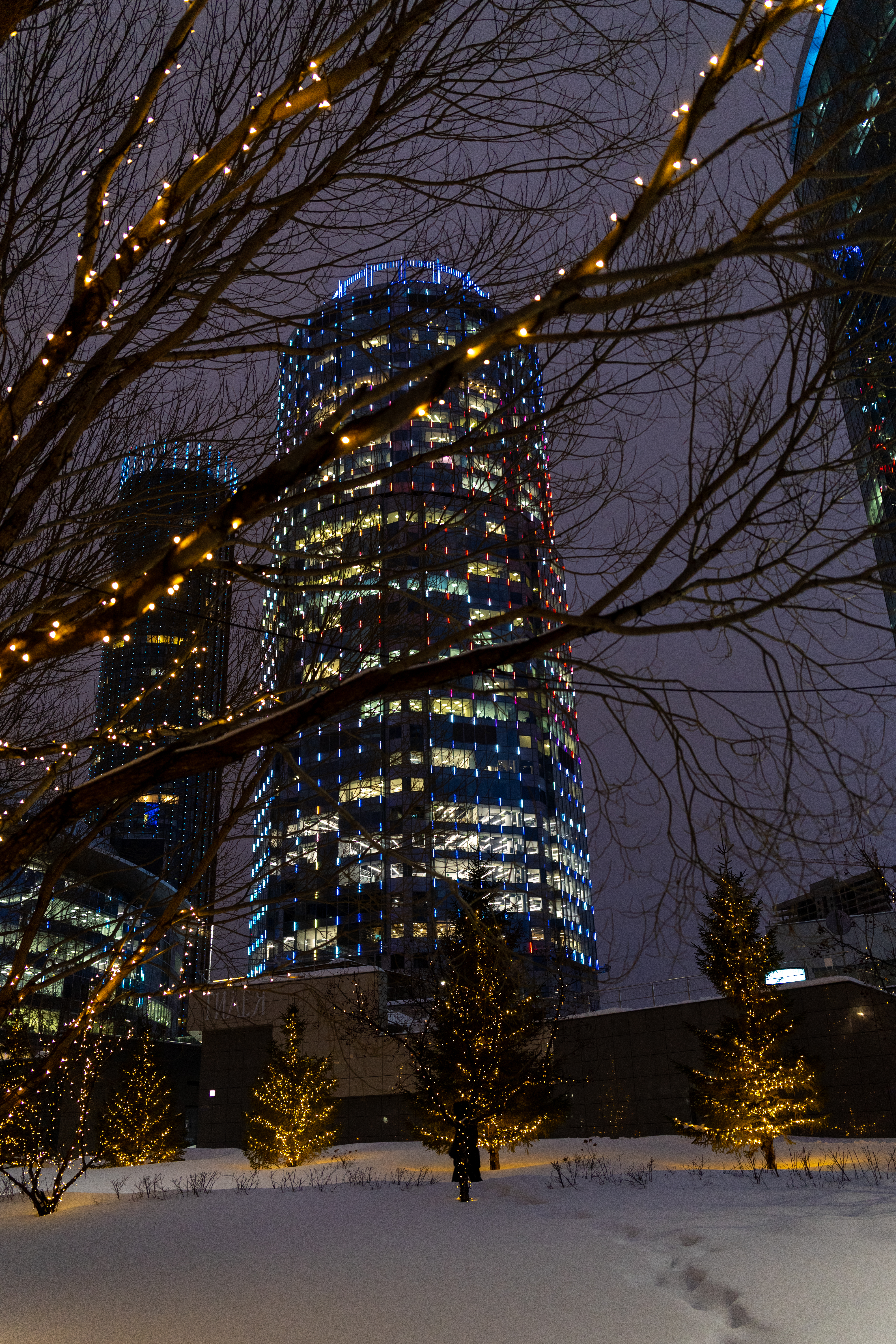
When it got fully dark, the city lit up. Bridges, high-rises, reflections — even through the ice and snow you sense the movement.
It’s unusual to see people walking on the frozen pond — it changes the sense of scale. Figures on the white surface look like dots on a blank sheet.
A Personal Note
February in Yekaterinburg is about contrasts:
- golden domes and cold sky,
- industrial bas-reliefs and modern glass,
- historical memory and the business district.
The Canon EOS R8 with the RF 28mm turned out to be an ideal companion — light, fast, with good performance at high ISO for evening shots. And the wide angle helped convey the scale of the city without clutter.
One thing I took from this trip: Yekaterinburg is beautiful not in a postcard way, but in the way eras overlap. Here the industrial foundation literally sits next to skyscrapers, and a stone’s throw from modern blocks you find places that remember turning points in history.
And winter, perhaps, makes that feel stronger than ever.